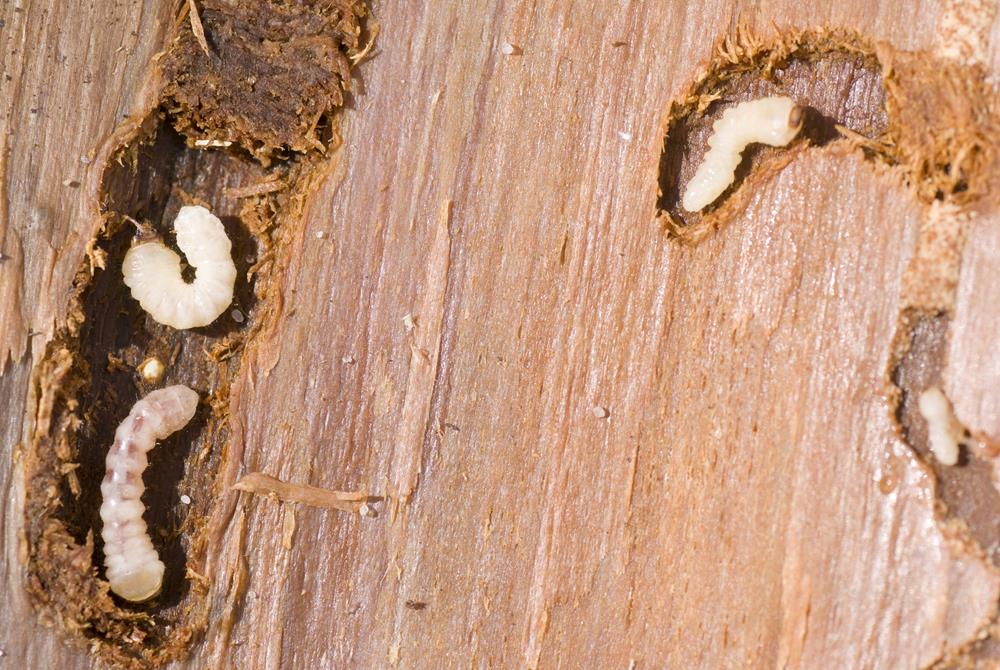
The term woodworm refers to the larvae of any wood-boring beetle. The most common forms of this wood boring insect include the Common Furniture Beetle (Anobium punctatum), the Deathwatch Beetle (Xestobium rufuvillosum), the House Longhorn Beetle (Hylotrupes bajulus) and the Powderpost Beetle (Lyctus brunneus). All of these pests consume wood as a larvae.
How To Spot Woodworm
Common Furniture Beetle (Anobium punctatum) By far the most common wood boring insect . All buildings over 25-30 years old are susceptible to infestation by this insect.
Death Watch Beetle (Xestobium rufovillosum)
Prefers to infest large sectioned hardwoods. Often associated with wet rot.
House Longhorn (Hylotrupes bajulus)
Usually isolated to the South of the UK. Infects the sapwood of most softwoods and favours roofing timbers.
Wood Weevil Favours very damp and decaying conditons. Chemical treatment is therefore not always necessary as removing the source of damp / decay will usually address the problem.
Other timber attacking pests include: Beetles of the Lyctus species, the Bark Borer Beetle and the Pinhole Borer Beetle.
Breeding Lifecycle
After landing, she starts the life cycle process by laying her eggs directly into the timber through existing cracks & crevices [and will often use old holes from previous infestations]. She will not lay her eggs on the surface of the timber because they will be exposed and vulnerable. After a few weeks the larvae emerge and will proceed deeper into the fabric of the timber. This is the ‘worm / larval stage’ and can last for anywhere between 2 and 5 years. During that time, the larvae consumes the timbers. Evidence will be observed as frass or dust, and it is this process that can affect the structural integrity of the timbers. Towards the end of the life cycle the larvae forms a pupal chamber and pupates from the larval stage into the adult beetle. The adult beetle then eats its way out of the exit hole. The females live for between 10 and 14 days. The males live between 3 and 4 days. Once the adult males have emerged, their only job is to mate with a female, the life cycle continues.After a few weeks the larvae emerge and will proceed deeper into the fabric of the timber. This is the ‘worm / larval stage’ and can last for anywhere between 2 and 5 years. During that time, the larvae consumes the timbers. Evidence will be observed as frass, or dust, and it is this process that can affect the structural integrity of the timbers.
Towards the end of the life cycle the larvae forms a pupal chamber and pupates from the larval stage into the adult beetle.
The adult beetle then eats its way out of the exit hole. The females live for between 10 and 14 days. The males live between 3 and 4 days. Once the adult males have emerged, their only job is to mate with a female. And the life cycle continues.
Woodworm Treatments
Treatment vary depending upon the species infesting a property or structure. Addressing problems associated with wood boring insects involves firstly surveying the property. Our resident expert (Stephen Knox) graduated with a degree in Construction Management from The University of Westminster and has over 30 years experience in the industry.